
Seasoning is the single most-asked-about topic in cast iron, whether the pan in question is a brand-new Lodge or a century-old Griswold stripped back to bare metal — and understanding what seasoning actually is makes the whole process far less mysterious.
What Seasoning Actually Is
Seasoning isn’t a coating sitting on top of the iron the way paint would — it’s a thin layer of oil that’s been polymerized through repeated heating, chemically bonding to the iron surface itself. That bonded layer is what creates cast iron’s natural non-stick quality and protects the metal from rust, and it builds and improves gradually with use rather than being a one-time finish applied once and forgotten.
Starting From Bare Metal
A pan stripped of old seasoning — whether through rust removal, electrolysis, or an oven self-clean cycle — needs a full seasoning process from scratch, while a pan with intact existing seasoning just needs maintenance layers built on top of what’s already there; see our rust removal guide and electrolysis guide for getting a neglected piece to bare metal before this process begins.
The Basic Seasoning Process
- Clean the pan thoroughly and dry it completely — any residual moisture interferes with the process
- Apply a very thin layer of a neutral, high-smoke-point oil (vegetable, canola, or shortening all work well)
- Wipe off the excess oil thoroughly — the pan should look almost dry, not glossy or wet
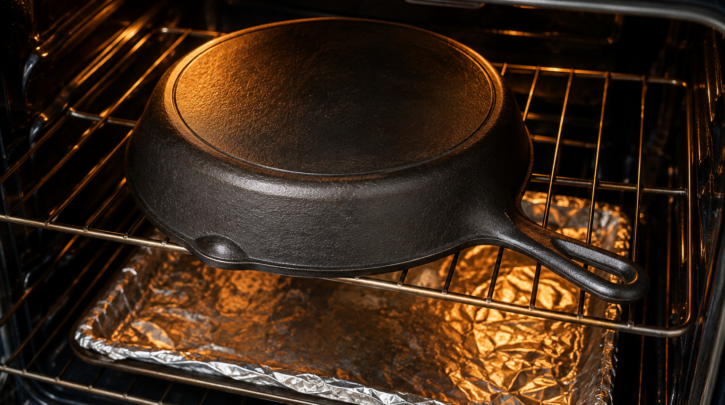
- Place the pan upside down in an oven at roughly 450 to 500°F, with foil or a tray on a lower rack to catch any drips
- Bake for about an hour, then let the pan cool in the oven
Why Wiping Off Excess Oil Is the Critical Step
The single most common seasoning mistake is leaving too much oil on the pan before baking — a thick layer doesn’t fully polymerize and instead turns sticky or tacky, sometimes flaking off later rather than bonding cleanly. Wiping the pan until it looks almost completely dry, counterintuitive as that feels, produces a far better result than leaving a visibly oily surface.
Building Up Multiple Layers
A single seasoning cycle produces a thin, somewhat fragile layer, and repeating the full process two or three times in a row builds a noticeably more durable base, especially important for a pan just stripped down to bare metal rather than one already carrying some intact seasoning history.
Maintaining Seasoning Through Regular Cooking
Once a base layer is established, ordinary cooking with fats and oils continues building and maintaining seasoning naturally over time — this is part of why a cast iron pan in regular kitchen use often develops better seasoning over years than one seasoned once and left on a shelf.
Factory Pre-Seasoning on New Cookware
Modern factory-preseasoned pans, including current Lodge production, arrive with an initial seasoning layer applied industrially, typically using soybean oil — a reasonable starting point, but most cooks find building an additional layer or two at home before regular use produces noticeably better initial performance than relying on the factory layer alone.
Troubleshooting Common Problems
| Problem | Likely Cause |
|---|---|
| Sticky or tacky surface | Too much oil applied before baking, or oven temperature too low |
| Flaking seasoning | Oil applied too thick in a single layer |
| Uneven, patchy seasoning | Inconsistent oil application or incomplete drying beforehand |
| Rust returning quickly | Incomplete drying after washing, or seasoning too thin to protect fully |
Seasoning Vintage vs. New Pieces
The seasoning process itself doesn’t change based on age or maker, but a vintage piece with old, damaged, or rancid-smelling seasoning often benefits from being stripped back to bare metal first rather than seasoning directly over compromised existing layers; see our restoration mistakes guide for how to approach that stripping process without damaging a piece that might carry genuine collector value.
Flaxseed Oil and Other Seasoning Debates
Some cooks specifically favor flaxseed oil for a particularly hard, durable seasoning layer, a method popularized online some years ago, though flaxseed can be more prone to flaking if applied even slightly too thick compared to more forgiving everyday oils. For most cooks, a common neutral oil applied thin and built up over several cycles produces excellent, reliable results without needing a specialty product.
A Realistic Timeline
A freshly seasoned pan is usable right away, but genuinely excellent, deeply built-up seasoning develops over months of regular cooking rather than appearing after a single session — patience and consistent use matter more than any single seasoning technique.
Give a newly seasoned pan a genuine chance to prove itself over repeated use before judging whether the process worked.