
Rust on cast iron forms wherever moisture reaches bare metal, typically where seasoning has worn thin, chipped, or never fully covered the surface — and removing it safely depends on how severe the rust actually is.
Light Surface Rust
For light, surface-level rust, scrubbing with steel wool or fine sandpaper, followed by a thorough wash and complete drying, is usually enough to get back to clean metal ready for re-seasoning — no soaking or chemicals required for rust this minor.
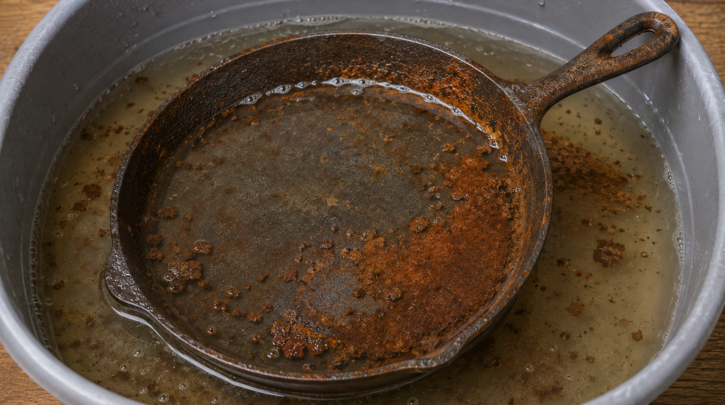
Heavier Rust: The Vinegar Soak Method
For more significant rust, a soak in equal parts white vinegar and water helps loosen and dissolve rust that scrubbing alone won’t fully remove. This method requires real attention, though, since vinegar is acidic enough to also attack the iron itself, not just the rust, if left too long.
Why Soak Time Matters So Much
Checking the pan every 15 to 30 minutes during a vinegar soak, rather than leaving it unattended for hours, prevents the acid from etching or pitting the underlying iron once the rust itself has already dissolved. Total soak time varies with rust severity, but erring on the side of shorter checks and multiple shorter soaks is safer than one long, unsupervised soak.
After the Soak
Once rust has loosened, scrub with steel wool or a stiff brush, rinse thoroughly to remove all vinegar residue, and dry the pan immediately and completely — bare, freshly cleaned iron can develop visible flash rust within minutes of exposure to air if it isn’t dried fully right away.
Drying Thoroughly Is Not Optional
Towel drying alone often isn’t enough to remove all residual moisture from a pan’s pores and corners — following up with a few minutes on a stovetop burner or in a warm oven ensures the pan is genuinely, completely dry before any oil goes on for seasoning.
Re-Seasoning Is Required Afterward
Any rust removal method strips away the protective seasoning layer along with the rust, which means a full seasoning process is required afterward rather than optional; see our seasoning guide for the complete process once the pan is clean and dry.
When Rust Is Too Severe for Soaking Alone
For genuinely heavy rust covering a large area, or rust combined with significant old carbonized seasoning buildup, electrolysis offers a more thorough and often gentler alternative to repeated vinegar soaking or aggressive mechanical scrubbing; see our electrolysis guide for that more involved but genuinely effective method.
Protecting Collector Value During Rust Removal
For a piece that might carry real collector value — a marked Griswold, a confirmed Sidney -0- Wagner, an early Lodge — starting with the gentlest effective method and avoiding aggressive mechanical abrasion protects fine casting detail and marks that heavier methods can damage; see our restoration mistakes guide for the specific errors worth avoiding.
Preventing Rust Going Forward
Once a pan is clean and freshly seasoned, consistent drying after every wash and a light wipe of oil after each use prevents most rust from ever forming again — prevention is genuinely easier than repeating a full rust-removal cycle down the road.
A Note on Cast Iron Left Outdoors or in Damp Storage
Pieces recovered from a damp basement, an outdoor shed, or similarly humid storage often carry more stubborn, deeper rust than pieces that simply sat unused in a dry kitchen cabinet, and may need a longer or repeated soak process, or electrolysis, to fully address rust that’s had years to take hold.
Baking Soda as a Gentler Alternative
For rust that’s genuinely mild, a paste of baking soda and water applied with a scrub pad offers a gentler alternative to a full vinegar soak, avoiding the acid-exposure timing concerns entirely, though it’s less effective against heavier, more established rust than a proper vinegar soak or electrolysis would be.
Checking for Damage Beneath the Rust
Once rust is cleared away, take a moment to inspect the underlying metal for cracks, pitting, or warping that the rust may have been obscuring — these structural issues, unlike surface rust itself, generally can’t be fixed and are worth knowing about before investing further time in restoration or reseasoning.
A little patience at each stage of this process pays off in a pan that’s genuinely ready for years of reliable use.
Rust removal is rarely the hard part — consistent prevention afterward is what actually keeps a pan rust-free long term.