
Electrolysis strips rust and old carbonized seasoning down to bare metal using an electrochemical reaction rather than physical abrasion, which is exactly why many serious collectors prefer it over sandblasting or wire-wheeling for pieces where fine casting detail and marks genuinely matter.
How Electrolysis Works
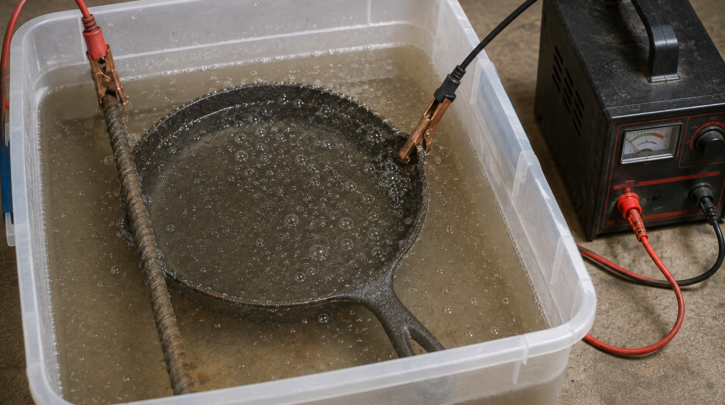
A piece submerged in a water and washing soda (sodium carbonate) solution, connected to a low-voltage electrical current, undergoes a reaction that lifts rust and old seasoning away from the iron surface without grinding or sandblasting anything off mechanically — which is why it preserves fine detail so much better than abrasive methods.
Basic Setup
- A non-metal container (plastic tote or similar) large enough to fully submerge the piece
- Washing soda dissolved in water — not baking soda, a genuinely different chemical
- A sacrificial anode made of plain steel or rebar, never stainless steel
- A battery charger as the power source
- Wire connections: anode to the positive terminal, the cast iron piece to the negative terminal
Why the Anode Material Matters — A Real Safety Point
Using stainless steel as the sacrificial anode is a genuine safety hazard, not just a technique preference — the reaction can produce hazardous chromium compounds from stainless steel that aren’t a concern with plain steel or rebar. This is one detail worth getting right every time rather than treating as optional.
Running the Process
Once connected and powered on, the setup typically runs for several hours up to a full day or more depending on how much rust and old seasoning buildup needs to come off, with visible bubbling at both the piece and the anode indicating the reaction is active.
Ventilation and Electrical Safety
The process produces some hydrogen gas, which means good ventilation matters, along with keeping the setup away from open flame or sparks. Always unplug the charger before connecting or disconnecting the clips, rather than working on live connections, and keep the whole setup away from children and pets while it’s running.
What Happens When It’s Done
A piece fresh out of an electrolysis bath is bare, clean gray metal with no protective layer at all, and it will begin flash-rusting almost immediately on contact with air — dry it completely right away, and moving quickly into an oil wipe and warm oven or stovetop drying step matters even more here than after a simple rust soak; see our seasoning guide for the full process to follow immediately afterward.
Why Collectors Prefer This Method for Valuable Pieces
Because electrolysis removes rust and old seasoning through a chemical reaction rather than physical grinding, it leaves casting texture, mold marks, and maker’s marks essentially untouched — a genuine advantage over sandblasting or aggressive wire-wheeling for any piece where those details matter to identification or value; see our restoration mistakes guide for the specific damage more aggressive methods can cause.
Multiple Rounds May Be Needed
A piece with especially heavy rust or thick old seasoning buildup sometimes needs more than one electrolysis session, with a scrub and fresh solution between rounds, to reach clean bare metal — worth expecting rather than assuming a single overnight run will always finish the job completely.
Is Electrolysis Worth the Setup Effort?
Building an electrolysis setup takes more upfront effort than a simple vinegar soak, but for anyone regularly restoring multiple pieces, or working on anything with genuine collector or historical value, that setup investment pays off repeatedly — it’s a reusable system rather than a one-time solution for a single pan.
Disposing of the Solution Responsibly
The washing soda solution used in electrolysis, along with any rust sediment that settles out during the process, should be disposed of according to local guidelines rather than poured directly into a storm drain or onto open ground — a small but genuinely responsible detail worth not overlooking.
Handled carefully and responsibly, electrolysis is one of the most genuinely satisfying restoration methods available for serious collectors.
Once you’ve built the setup once, it’s ready to use again any time a new project turns up.