
Because Lodge remains in continuous production, most of its classic skillet and Dutch oven shapes are still being made today in some form — which means the genuinely collectible “discontinued” side of Lodge collecting concentrates in novelty shapes and early production forms the company no longer makes at all.
Novelty and Specialty Shapes
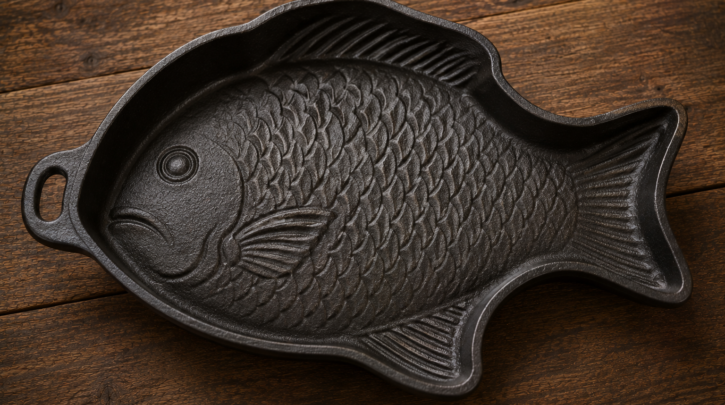
Beyond standard round skillets, Lodge produced novelty-shaped pans over its long history — including fish-shaped pans and various specialty cornbread stick pan shapes — that draw dedicated collector interest precisely because they represent a departure from the everyday round skillets and Dutch ovens that make up the bulk of Lodge’s output, then and now.
Early Raw-Cast Production
Pieces from before Lodge introduced factory pre-seasoning represent their own collectible category — genuinely older production sold as raw, unseasoned castings rather than the ready-to-use cookware sold today; see our dating guide for how to confirm a piece falls into this earlier category.
Early Specialty Forms
Early Lodge production included specialty forms beyond basic skillets, similar in spirit to the spider skillets and unusual hollowware pieces collectors seek from Griswold and Wagner, though Lodge’s specific documented specialty forms are less exhaustively cataloged than those two brands’ due to a smaller dedicated collector base historically focused on Lodge specifically.
Why Lodge’s Documentation Is Thinner
Griswold and Wagner both benefit from decades of dedicated collector research precisely because their production ended, giving researchers a fixed, closed body of work to fully document. Lodge’s continuous, still-ongoing production means the collector community researching its specifically discontinued older patterns is smaller and the documentation genuinely less exhaustive — worth being honest about rather than overstating how well-mapped this specific corner of the hobby actually is.
Where to Find Discontinued Patterns
Estate sales, inherited kitchen collections, and antique malls remain the most likely sources for discontinued Lodge specialty forms, alongside dedicated collector communities where these less common shapes get specifically discussed and traded; see our buying guide for what to expect across different sourcing options.
A Growing Niche Worth Watching
As more collectors look for an alternative to the higher prices and higher fake-risk of serious Griswold collecting, interest in Lodge’s own discontinued specialty forms has room to grow — worth keeping an eye on for anyone drawn to this specific, still-developing corner of vintage cast iron collecting.
Documenting Your Own Finds
Given how much less exhaustively documented Lodge’s discontinued patterns are compared to Griswold’s, photographing and noting details on any unusual Lodge piece you come across — shape, approximate age markers, any distinguishing text or numbers — genuinely contributes to a still-developing body of collector knowledge, not just your own personal reference.
A Rewarding Corner for a Patient Collector
Precisely because this niche is less picked-over and less exhaustively cataloged than Griswold or Wagner collecting, there’s real room for a patient, curious collector to genuinely contribute new documentation and discover pieces that haven’t already been thoroughly cataloged by decades of prior collector research.
Approaching an Unusual Lodge Find
When a genuinely unfamiliar Lodge shape or form turns up, resist the urge to assume it’s either worthless or a hidden treasure right away — checking overall casting quality, any visible marks, and comparing against what dedicated Lodge collector communities have documented gives a far more grounded read than guessing based on unfamiliarity alone.
Specialty Forms Beyond Cooking Vessels
Beyond cookware specifically, Lodge’s long history includes other cast iron items produced for household and outdoor use that fall outside the skillet-and-Dutch-oven mainstream this site focuses on — these tangential items are worth knowing exist even though detailed coverage of them sits outside vintage cookware collecting specifically.
Why Patience Pays Off Here Especially
Because this corner of the hobby is still actively being documented rather than settled, prices and recognized rarity for specific discontinued Lodge forms can shift meaningfully as more collectors research and share findings — a genuinely dynamic, still-developing situation compared to the more fixed, well-mapped territory of Griswold collecting.
For a curious, patient collector, that ongoing uncertainty is part of the appeal rather than a drawback.
Every well-documented piece contributes a little more clarity to a still-forming picture.