
Cast iron has a problem most collectibles don’t: it’s heavy, it’s brittle under the wrong kind of impact, and a hairline crack from a rough freight handoff can turn a great find into scrap metal. That single fact — not price, not selection — should be the first thing that decides where you buy a given piece.
A ring, a pocket watch, a stack of flatware — none of that cracks in shipping the way a 10-inch skillet can. Cast iron is dense, rigid, and unforgiving of a dropped box or a bad packing job, which means the calculus for where to buy isn’t just about price and selection. It’s about whether you can put your hands on the piece before you pay, or whether you’re trusting a box, a carrier, and someone else’s packing skills.
The Rule: Buy Heavy and Common Local, Buy Rare and Small Online
Once you frame the decision around weight and shipping risk, the venue question mostly answers itself:
- Heavy, common pieces — Dutch ovens, large skillets, griddles — are exactly what you want to buy in person. They’re the least practical thing to ship, the easiest thing to damage in transit, and the most available locally, so there’s rarely a reason to accept shipping risk on something you can find at the next estate sale.
- Rare, small, or hard-to-find pieces — an unusual pattern number, a confirmed early mark, a specialty form you haven’t seen in months of local hunting — are worth accepting shipping risk for, because the odds of finding that specific piece locally are low enough that online sourcing is the only realistic path to it.
That’s the filter to run before you even look at price. A common 8-inch skillet isn’t worth the shipping risk when a nearly identical one is probably sitting in a box at the next flea market. A genuinely rare piece is worth the risk because it might not surface locally at all.
Buying Local: Where Weight Works in Your Favor
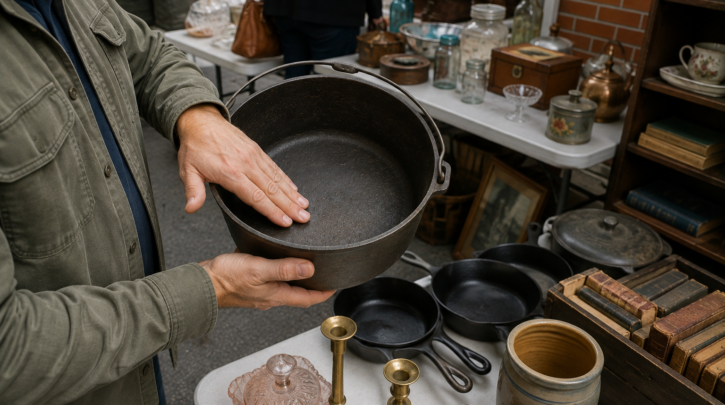
In-hand inspection is the real advantage of local sourcing, and it matters most on exactly the pieces that are riskiest to ship.
Estate Sales
Estate sales often offer the best original pricing and a real chance at undiscovered finds, since pricing is frequently set by someone without deep collector knowledge of what a specific piece is worth. You can pick up a heavy Dutch oven, turn it over, run a hand along the cooking surface, and check for cracks on the spot — no packing, no carrier, no waiting to find out if it arrived in one piece. The tradeoff is that early arrival matters enormously for the best pieces, and cash is often preferred or required on-site.
Flea Markets
Flea markets are a genuine mixed bag — occasional great deals and honest seller mistakes happen alongside misidentified pieces sold either as more valuable than they actually are or, just as often, genuinely valuable pieces sold cheaply by a seller who has no idea what they have. As with estate sales, the real value here is being able to inspect a heavy piece directly before money changes hands. See our antique vs. modern reproduction guide for the detection framework worth having ready when you’re checking a piece in hand.
Antique Malls and Multi-Dealer Shops
Antique malls offer convenient browsing across many dealers’ inventory in one place, with clearly marked prices, though those prices typically run higher than estate sale pricing since they include dealer markup. You still get in-hand inspection, plus the advantage of being able to ask a knowledgeable dealer questions directly — something estate sales rarely offer.
Buying Online: Reserve It for What’s Actually Worth the Risk
Online marketplaces offer by far the largest selection and the ability to search for a specific maker or pattern directly — which is exactly why they’re the right tool for rare and hard-to-find pieces, and a riskier tool for common heavy ones. You’re buying based on photos and a seller’s description rather than handling the piece yourself, and cracks in particular can be genuinely hard to spot in photos alone. A crack that’s obvious the moment you pick up a skillet in person can be completely invisible in a listing photo, and that risk compounds with a heavier piece that’s more likely to be mishandled in transit to begin with.
Search vintage cast iron on eBay to see the kind of selection you’re trading local inspection for — it’s the best place to look once you know exactly what rare piece you’re after.
When buying online, a few habits reduce the risk that comes with skipping in-hand inspection:
- Ask for close-up photos of the cooking surface, bottom, and handle specifically, not just a general shot
- Ask directly whether the seller has checked for cracks by running a hand along the surface
- Confirm the return policy before buying anything expensive sight unseen
- Ask how the piece will be packed — a heavy piece needs real cushioning, not a loose box, to survive freight handling
Auctions: Local Inspection or Shipping Risk, Depending on Format
In-person auctions carry the same in-hand advantage as estate sales — you can inspect a heavy piece before bidding, which matters a great deal for a Dutch oven or large skillet. Online auctions reintroduce the same photo-and-description risk as any other online purchase. Either way, setting a firm maximum price before bidding begins, and sticking to it regardless of how the bidding unfolds, is the single most useful discipline for auction buying.
Collector Clubs and Specialty Shows: The Middle Ground for Rare Pieces
Dedicated collector club events and specialty cookware shows connect buyers directly with knowledgeable sellers who specialize in vintage cast iron specifically. They’re often the best source for rare sizes, specialty forms, or confirmed early-mark pieces that rarely surface through general channels — and because they’re in person, you get local-sourcing inspection even on pieces that would otherwise only turn up online. For collectors pursuing a single maker or pattern, dedicated collector forums and buy-sell-trade groups can also surface a specific piece faster than browsing general marketplaces at random; see our starting a collection guide for how to connect with these communities as a new collector.
Budgeting and Timing
Set a rough budget before heading out to an estate sale or antique mall, and treat it as a genuine limit rather than a loose guideline — it’s the easiest way to avoid overspending on an impulse find that seemed irresistible in the moment but doesn’t actually fit your collection’s focus.
Estate sales typically offer the best selection on the first day but often reduce prices on later days to clear remaining inventory — a genuine tradeoff between selection and price worth weighing based on whether you’re chasing something specific or open to whatever turns out to be a good value. Neither approach is wrong; it depends on whether you’re hunting for something specific or simply enjoying the process of seeing what turns up. Some dedicated collectors will travel a genuine distance for a specific show, sale, or listing tied to a piece they’ve been searching for over a long period — a reasonable choice once you know your own focus well enough to be confident the trip is worth it, though it’s not a requirement for enjoying the hobby at any level.
The Bottom Line
Let weight and shipping risk make the first decision for you. A heavy Dutch oven or common skillet belongs at the next estate sale or antique mall, where you can check it for cracks with your own hands before any money changes hands. A rare pattern number or specialty form you can’t find locally belongs online, where the selection makes up for the risk — as long as you ask the right questions before you buy.