
Restoration mistakes on vintage cast iron are often irreversible, and the most common ones happen because a method that works fine on a cheap, common pan can permanently damage the fine detail and marks that make a rarer piece actually valuable.
Overly Aggressive Sandblasting or Wire-Wheeling
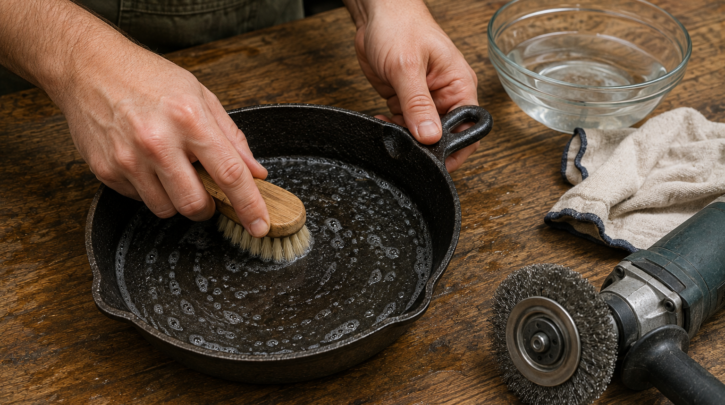
Heavy sandblasting or an aggressive wire wheel on a drill or grinder can remove fine casting detail, blur or damage maker’s marks, and thin the metal itself — damage that directly reduces both cooking performance and collector value, and that can’t be undone once it’s happened; see our Griswold value guide for how much original, unrestored condition matters to serious collectors.
The Oven Self-Clean Cycle Method
Running a pan through an oven’s self-cleaning cycle is a popular way to burn off old seasoning and grime down to bare metal, and it genuinely works — but it’s not entirely risk-free. The extreme heat involved can occasionally cause warping or cracking, particularly in a piece that’s already structurally stressed, and the process produces smoke and fumes that require real ventilation. This method is worth real caution rather than automatic use on a piece that might be rare or valuable.
Skipping Thorough Drying
Bare, freshly cleaned cast iron flash-rusts within minutes if it isn’t dried completely, and towel drying alone often isn’t enough — following up with brief stovetop or oven heat ensures genuinely complete drying before any oil goes on.
Applying Seasoning Oil Too Thick
As covered in our seasoning guide, the most common seasoning mistake is leaving too much oil on the pan before baking, which produces a sticky or flaking result rather than a clean, durable bond; see our seasoning guide for the correct thin-layer approach.
Harsh Chemicals Without Proper Precautions
Lye and other caustic oven-cleaner-style products can strip old seasoning effectively, but they’re genuinely hazardous chemicals requiring gloves, eye protection, and real ventilation — not a casual weekend project without taking those precautions seriously.
Restoring Before Assessing Value
Jumping straight to aggressive restoration on a piece you haven’t yet identified or researched is a common, avoidable mistake — a piece that turns out to be a genuinely rare size, form, or mark era is worth identifying and possibly getting a professional opinion on before any restoration work begins, gentle or otherwise; see our identification guide for what to check first.
Not Considering Whether to Restore at All
Some collectors specifically value original, unrestored condition — including visible age and patina — over a “like new” appearance, particularly for genuinely rare or historically significant pieces. It’s worth deciding whether a piece is meant for display, for cooking, or for resale before choosing a restoration approach, since those goals sometimes point toward different amounts of intervention.
A General Rule: Start Gentle, Escalate Only if Needed
For any piece where value or rarity is uncertain, starting with the gentlest effective method — a simple soak and hand scrub, or electrolysis rather than mechanical abrasion — and escalating only if genuinely necessary protects against irreversible damage that a more aggressive first attempt could cause.
Testing on a Low-Stakes Piece First
Practicing a new restoration method — especially electrolysis or a vinegar soak — on a common, inexpensive piece before attempting it on something potentially valuable builds real confidence and catches personal technique mistakes before they matter on a piece where the outcome genuinely counts.
When Professional Restoration Makes Sense
For a genuinely rare or historically significant piece, consulting an experienced restorer or collector before doing any work at all is worth the conversation — some pieces are valuable enough that even a well-intentioned DIY attempt carries real risk the piece’s worth doesn’t justify taking on alone.
Documenting Before and After
Photographing a piece before starting any restoration work, and again at each major step, creates a useful record if questions ever come up later about what was done — and it’s genuinely satisfying to look back on once a piece is fully restored and seasoned.
The most successful restorations tend to come from patient, gradual approaches rather than any single dramatic fix.
Respecting that pace protects both the piece in front of you and your own long-term satisfaction with the result.