
Most Griswold cast iron in circulation today is genuinely affordable — common sizes in good, usable condition often sell for modest sums. Real value concentrates in rare sizes, unusual forms, specific logo eras, and pieces in excellent, largely unrestored condition.
Rarity of Size
As covered in our skillet numbers guide, the smallest and largest sizes were produced in far smaller numbers than common household sizes, and that scarcity translates directly into stronger prices for confirmed genuine examples.
Unusual and Specialty Forms
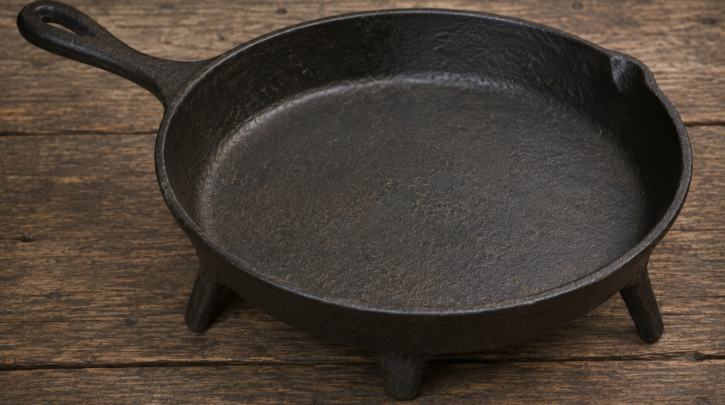
Beyond standard skillets, specialty forms command real collector interest — spider skillets, three- or four-legged pans designed for open-fire cooking, are a well-known example of a genuinely scarce, actively sought form, alongside unusual griddles, waffle iron patterns, and hollowware pieces that saw much lower production runs than everyday skillets.
Mark Era and Collector Preference
Certain logo eras carry stronger collector preference than others at any given time, which affects price somewhat independent of raw rarity alone; see our marks and logos guide for the general era framework, though preference within the hobby does shift over time rather than staying fixed.
Condition Matters Enormously
A smooth cooking surface free of significant pitting, cracks, or warping matters enormously to serious collectors and cooks alike — cracks in particular are often considered a deal-breaker even on an otherwise rare and desirable piece, since a crack compromises both the cooking function and the long-term structural integrity of the casting.
Original Condition vs. Over-Restoration
Collectors generally place a premium on pieces in good original condition over ones that have been aggressively restored — heavy sandblasting or wire-wheeling can remove fine casting detail and thin the metal, which reduces both cooking performance and collector value even though the piece looks dramatically cleaner; see our restoration mistakes guide for how to avoid this specific problem.
Checking Current Prices
As with every collectible category, checking recent completed sales gives a far more accurate current picture than an older printed price guide, since collector demand and pricing shift over time.
Check current Griswold listings and completed sales Search Griswold cast iron on eBay
When to Get a Professional Opinion
For a piece that seems like it could be a genuinely rare size, an unusual specialty form, or an early mark era, a professional appraisal is worth the cost before selling or insuring it; see our appraisal guide for how that process works.
Value Beyond Resale
Knowing a realistic value matters even without any plan to sell — for insurance purposes, for deciding how carefully to store and handle a piece, and simply for understanding what’s actually in a family collection passed down without any record of what it’s worth.
A Grounded Way to Assess a Collection
For anyone assessing a group of pieces for the first time, start by identifying size number, pattern number, and mark era for each piece, note visible condition issues, then check recent completed sale prices for comparable pieces before assuming either that everything is worthless or that every piece is a hidden fortune — the reality for most collections sits somewhere in between.
Patience Pays Off With Rare Pieces
A genuinely rare size or specialty form sometimes takes longer to find the right buyer at the right price than a common piece would, simply because the pool of collectors specifically seeking that item is smaller — worth keeping in mind rather than assuming a slow sale means the price was set wrong.
Documenting a Collection Over Time
Keeping photos and notes on each piece’s size number, pattern number, mark era, and condition, alongside whatever price research you’ve done, creates a useful running record whether you eventually sell, insure, or simply want to track how a collection has grown — this kind of documentation also makes any future appraisal conversation faster and more productive.
Rarity Isn’t the Only Reason to Value a Piece
A common, modestly valued skillet that’s been in a family for generations, used for countless meals, carries a different kind of worth than a strictly financial appraisal captures — it’s worth remembering that sentimental and practical value are genuinely legitimate reasons to keep a piece regardless of what a price guide says it’s worth on the open market.
Both kinds of value are legitimate, and it’s worth being clear with yourself about which one matters most for any given piece.