
Griswold’s strong collector demand and premium pricing have made it the single most targeted name for fakes and reproductions in the entire vintage cast iron hobby — a genuinely serious problem worth taking seriously before any purchase where authenticity affects the price.
Two Different Kinds of Fakes
The problem takes two distinct forms. The first is a fake or added mark — a genuine antique but unmarked pan, or a genuine pan from a lesser-known maker, given a counterfeit Griswold logo to inflate its value. The second is an entirely new casting, sometimes made from a mold pantograph-copied off a real Griswold piece, sold either honestly as a reproduction or, more troublingly, deceptively marketed as a genuine antique.
How Fake Marks Usually Show Themselves
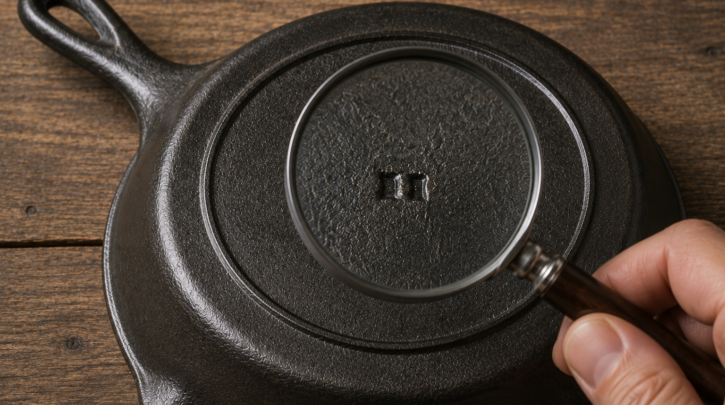
A mark added after the original casting — whether acid-etched, engraved, or otherwise applied — typically shows inconsistent depth, visible tool marks under close inspection, or a surface texture that doesn’t quite match the rest of the piece, since genuine marks were cast in at the same time as everything else; see our marks and logos guide for what a genuine cast-in mark should look like by comparison.
Checking the Gate Mark
The gate mark — where molten iron entered the mold during casting — has a documented typical location and shape for genuine Griswold pieces of a given era. A gate mark in an unusual location, or one that looks inconsistent with the piece’s claimed era, is a meaningful red flag worth investigating further rather than dismissing.
Weight and Casting Texture
Modern reproduction castings sometimes differ subtly in weight or wall thickness from genuine period pieces, and the surface texture of the raw casting — the fine graininess left by traditional sand-casting — can look noticeably different from a piece cast with modern equipment and materials, even when the overall shape and mark look convincing at a glance.
Mismatched Size and Pattern Numbers
Comparing a piece’s size number, pattern number, and mark era against documented genuine combinations catches many fakes, since counterfeiters don’t always get every detail internally consistent; see our skillet numbers guide for how this cross-referencing works.
Run the Quick Checks Before You Buy
Our free checklist covers the fastest authentication tells for genuine Griswold, sized to actually use while you’re standing over a pan at an estate sale.
Buying From Reputable Sources
Buying from established dealers with a track record in vintage cast iron specifically, or from sellers active in dedicated collector communities, meaningfully reduces risk compared to an anonymous online listing with no reputation history behind it, particularly for an expensive or claimed-rare piece.
When in Doubt, Get a Second Opinion
For any purchase where the price assumes genuine, rare authenticity, getting a second opinion from an experienced collector or a professional appraisal before committing is worth the extra effort — the cost of verification is almost always smaller than the cost of being wrong on an expensive purchase.
Reproductions Aren’t Automatically Worthless
A modern reproduction, honestly represented as such, can still be a genuinely nice piece of cookware to actually use in the kitchen — the real problem is only ever paying original-piece prices for one without realizing what it actually is, or later reselling one as an authentic antique.
Building a Personal Reference
Serious collectors typically build a personal reference of verified genuine marks, gate mark locations, and casting textures, either through dedicated price guides, collector club resources, or their own documented purchases, and lean on that reference whenever a new piece raises a question — exactly the same approach that pays off across every collectible category.
Trusting the Process as You Learn
It’s normal to feel uncertain early on, especially given how convincing some fakes have become — that uncertainty fades with repeated practice examining genuine pieces, and even experienced collectors occasionally get fooled, which is simply part of collecting in a hobby with this much money at stake rather than a sign anything is wrong with your approach.
Staying curious and careful in roughly equal measure is the whole philosophy behind every guide on this site.