
Cast iron is one of the only antique categories where the object is still doing the exact job it was made for a hundred years later. That’s part of the appeal — but it’s also the trap that catches nearly every new collector at least once. A rusty skillet looks like something to fix, so the instinct is to strip it, re-season it, and get it back in the kitchen rotation as fast as possible. That instinct, acted on before you know what you’re holding, is how new collectors unknowingly destroy the exact value they didn’t yet know the piece had.
An aggressive wire-wheel pass can take the maker’s mark off entirely. A thorough sanding to get a “perfect” cooking surface can smooth away a heat ring that was the one detail confirming an early production run. A well-meaning electrolysis strip-and-reseason on a piece you haven’t identified yet can turn a genuinely collectible find into a nice, ordinary cooking pan — permanently. None of this is reversible. This guide is built around avoiding that trap: identify and research before you restore anything, starting from day one.
The First Skill: Reading the Mark, Not Fixing the Pan
Before you touch a wire wheel, a lye bath, or even steel wool, the first skill worth building is reading and dating what’s already on the piece. Maker’s marks, logo style, pattern numbers, gate marks, and the presence or absence of a heat ring all carry information that restoration can erase — and once it’s gone, no amount of research afterward can bring it back.
Start every new piece the same way, restoration tools untouched:
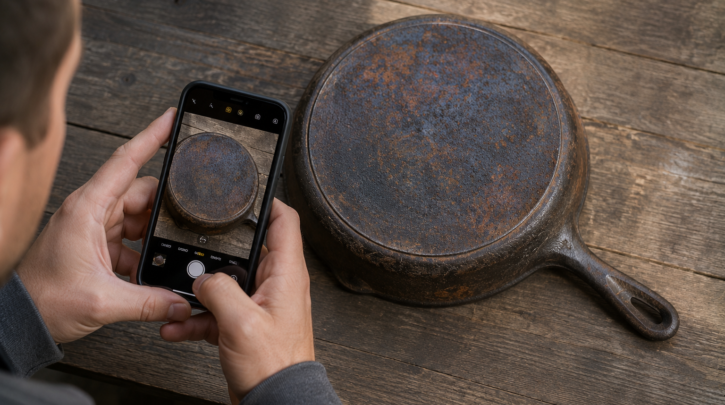
- Photograph the bottom and mark in good light before doing anything else to the piece.
- Identify the maker and logo style against reference photos.
- Check for a heat ring, and note whether it’s present, since its condition and presence both carry information.
- Record any pattern or size numbers stamped near the mark.
- Only after all of that — decide what, if any, restoration actually makes sense.
See our general identification guide for the core framework worth practicing on every new piece, and our heat ring guide for why that specific detail is so easy to accidentally sand away.
Keep a Quick Reference Handy From Day One
Our free 5-Second Griswold Skillet ID Checklist gives new collectors a fast, practical starting reference for the most commonly faked name in the hobby — worth having on hand before your next estate sale, not after you’ve already started restoring something.
Pick a Focus
Deciding early whether to focus on a single maker, a specific pattern or form, or simply functional pieces to actually cook with gives a new collection real direction. Trying to collect everything at once tends to dilute both budget and identification skill. See our Griswold vs. Wagner guide for one common way collectors choose between the major makers.
Start With Common, Affordable Pieces — and Practice Identifying Before Restoring Them Too
Common mid-range sizes from any major maker are widely available, inexpensive, and forgiving to learn on. Building genuine identification confidence on lower-stakes pieces makes it much easier to recognize something genuinely unusual later, rather than risking a big purchase — or an aggressive restoration — before your own eye is ready for it. Treat every early piece, even a cheap, common one, as practice for the identify-first habit you’ll need on something more significant.
Build Handling Experience Before Big Purchases
Handling genuine pieces regularly — at shows, shops, or through a collector club — teaches the tactile and visual differences that separate confident identification from guesswork far more effectively than reading alone. The more marks you’ve seen in person, the faster you’ll recognize when a piece in your own hands deserves research before it goes anywhere near restoration.
Learn Restoration Only After You Can Identify What You’re Restoring
Understanding proper seasoning and gentle rust removal matters — but understanding when a piece might carry real collector value, before you start, matters more. A wire wheel doesn’t know the difference between rust and a mark worth preserving, and neither will you until identification becomes a habit that happens before restoration, every time, without exception. See our seasoning guide and restoration mistakes guide for the fundamentals worth learning early — and for the specific mistakes, like over-aggressive stripping, that most often cost new collectors value they didn’t know they had.
Set a Realistic Budget
Decide on a rough spending limit before heading to an estate sale or antique mall, and treat it as a genuine boundary rather than a loose guideline. This helps avoid overspending on impulse finds that don’t actually fit your chosen focus.
Connect With the Collector Community
Dedicated collector clubs and online communities offer identification help, trading opportunities, and access to reference material far deeper than any single overview can responsibly provide. They’re also the fastest way to get a second opinion on a mark before you decide whether a piece is safe to restore — genuinely valuable connections for any new collector willing to ask questions and share finds.
Know Where to Buy
Estate sales, antique malls, online marketplaces, and collector shows each offer a different mix of price, selection, and risk. See our buying guide for what to expect across these different sourcing options.
Enjoy the Process — Just Identify First
Whether the eventual goal is a display collection, a working kitchen rotation, or both at once, vintage cast iron rewards patient, curious collecting more than rushing toward a specific outcome. Wanting to cook with a piece isn’t the problem — it’s genuinely one of the best parts of this hobby. The problem is only ever sequencing: restoring before identifying is the one habit that can quietly cost you value you can never get back, no matter how good your seasoning technique is.
A Realistic First-Year Timeline
Most new collectors spend their first several months mostly handling and identifying common pieces, gradually building confidence before making a first genuinely significant purchase — or attempting a first serious restoration. There’s no rush, and moving at this pace consistently produces more satisfied, knowledgeable collectors than trying to assemble an impressive collection, or a fully restored one, quickly.
It’s Fine to Change Focus Over Time
Many collectors start with one maker or approach and gradually shift interest as they learn more about the broader hobby. Starting with Griswold and later adding Wagner, or beginning purely functional and later developing genuine collector interest, are both common and perfectly reasonable paths rather than a sign of an unfocused start.
Learning From Mistakes
An early misidentification, an overpaid purchase, or a restoration attempt that didn’t go quite as planned are all genuinely normal parts of learning this hobby. Nearly every experienced collector has a story about a mark they wire-wheeled off before they knew better, and looking back on those moments with humor rather than embarrassment is part of what makes the learning process enjoyable rather than stressful.
Give yourself the same grace you’d extend to any beginner in a genuinely deep hobby — the expertise, and the discipline to identify before you restore, both come with time.