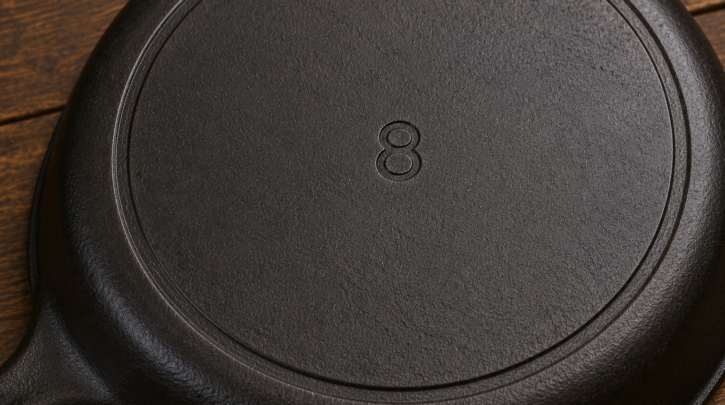

Griswold skillets are identified primarily by a size number cast into the bottom of the pan, running roughly from 0 up through 20, with each number corresponding to a specific approximate diameter — a reference system detailed enough that collectors use it constantly for both identification and authentication.
How the Size Numbers Work
Larger numbers generally correspond to larger skillets, though the relationship isn’t perfectly linear across the full range, and not every number was produced in every era or logo style. The most commonly found sizes today — roughly numbers 8 through 10 — were everyday household sizes produced in the highest volumes, which is exactly why they remain the most affordable and widely available sizes for a new collector.
An Approximate Size Reference
| Size Number | Approximate Diameter |
|---|---|
| 3 | ~6.5 inches |
| 5 | ~8 inches |
| 6 | ~9 inches |
| 8 | ~10.5 inches |
| 9 | ~11.25 inches |
| 10 | ~11.75 inches |
| 12 | ~13.5 inches |
These figures are general, commonly cited approximations rather than exact factory specifications — always confirm precise measurements against the actual piece rather than relying on a size number alone when it matters for a specific purchase.
Rare Sizes Command Real Premiums
The smallest sizes, roughly 0 through 2, and the largest sizes, roughly 13 and above, were produced in far smaller numbers than the common mid-range sizes, since they served more specialized purposes rather than everyday household cooking. This lower production volume is exactly why these sizes command meaningfully higher prices; see our value guide for how size rarity combines with other factors to determine price.
Pattern Numbers: A Separate System
Alongside the size number, many pieces carry a separate pattern number, an internal foundry reference tied to the specific mold used for that casting run rather than to the finished size. Pattern numbers help serious collectors and researchers pin down more precise dating and mold history than the size number alone can provide.
Why Mismatched Numbers Are a Red Flag
Documented reference sources establish which size and pattern number combinations, along with which logo eras, genuinely occurred together in actual Griswold production — a piece showing a combination that doesn’t match any documented genuine pairing is a meaningful warning sign worth taking seriously rather than dismissing; see our fakes and reproductions guide for how this check fits into the broader authentication picture.
Using Numbers to Build a Collection
Some collectors specifically pursue completing a full numerical run of a particular skillet style, hunting down each size in sequence — a genuinely satisfying, well-defined collecting goal that the numbering system makes possible in a way looser, unnumbered categories simply don’t offer.
Cross-Referencing With Dedicated Resources
Because exact documented size and pattern combinations run deep, a dedicated Griswold reference guide or active collector community remains the most reliable resource for confirming whether a specific number combination on a piece in front of you genuinely matches documented production.
Numbers Also Appear on Other Forms
Beyond skillets, Griswold’s Dutch ovens, griddles, and waffle irons carried their own size and pattern conventions, sometimes following the same general numbering logic and sometimes using a genuinely separate system specific to that form — worth keeping in mind rather than assuming the skillet numbering scale applies uniformly across every product Griswold made.
A Practical Habit Worth Building
Getting into the habit of checking size number, pattern number, and mark together every time, rather than glancing at just one of the three, turns a quick estate-sale table scan into a genuinely reliable first-pass identification check that catches most obvious mismatches on the spot.
Numbers as a Conversation Starter
Referencing a specific size number when discussing a piece with another collector or a dealer — “a number 8” rather than just “a medium skillet” — is the standard vocabulary of the hobby, and picking it up early makes it much easier to participate in collector forums, ask informed questions, and understand price discussions that assume this shared reference system.
Numbers Don’t Tell the Whole Story
A correct size number alone doesn’t guarantee authenticity or value on its own — it’s one input among several, and the most confident identifications always combine the number system with mark quality, casting texture, and weight rather than leaning on any single check in isolation.
Treat the number system as one strong tool in a larger kit, not the whole toolkit by itself.