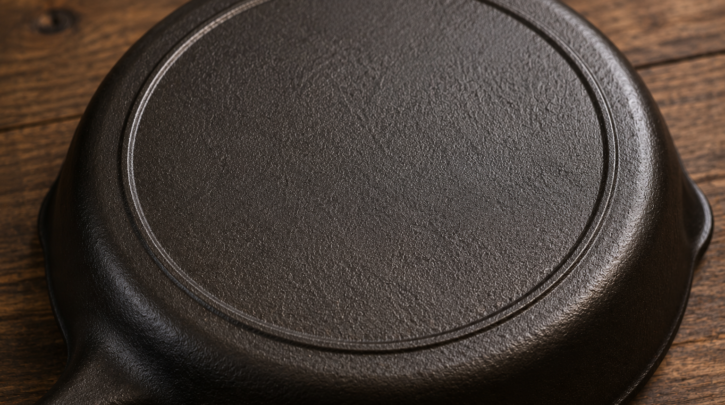

A heat ring is a raised ring cast into the underside of a skillet, and while it looks purely decorative to modern eyes, it originally served a genuine practical purpose tied to a cooking technology that’s largely disappeared from American kitchens.
Why Heat Rings Existed
Old wood- and coal-burning cookstoves had round, removable iron lids of specific sizes covering the firebox openings, and a heat ring helped center a pan correctly over that opening while also lifting the actual cooking surface slightly above the direct flame, promoting more even heating on that older stove design than a flat-bottomed pan would have provided.
Why Heat Rings Disappeared
As cookstoves evolved toward modern flat-surface gas and electric designs through the 20th century, the heat ring’s original purpose became irrelevant, and manufacturers gradually phased it out of new production — flat-bottomed pans simply work better on a flat modern stovetop.
Using Heat Rings as a Dating Clue
Because of this practical history, a full, prominent heat ring generally suggests older production made with traditional cookstoves in mind, while the absence of a heat ring, or a much smaller vestigial version, generally points toward later production made for modern stovetops — a genuinely useful rough dating signal, though timing varied somewhat by individual maker rather than changing on one universal date across the whole industry.
Specific Notch Configurations
Beyond the ring’s simple presence or absence, some makers’ heat rings carry specific notch configurations tied to documented production eras — Lodge’s “3-notch” heat ring is one well-known specific example collectors reference; see our Lodge dating guide for how that particular detail fits into Lodge’s own production history.
Heat Rings Vary by Maker
Different manufacturers phased out heat rings at somewhat different points in their own production histories, which means a heat ring’s presence or absence is most useful combined with a maker’s own specific timeline rather than applied as one universal rule across every brand; see our Griswold identification guide and Wagner identification guide for how each brand’s own history factors in.
One Clue Among Several
As with every dating method on this site, heat ring style works best combined with marks, size numbers, and overall casting quality rather than relied on alone — a piece with a full heat ring but a mark style that clearly indicates later production is worth a second look rather than an assumption based on the ring alone.
Checking for a Heat Ring on an Unmarked Piece
For an unmarked orphan pan with no other identification clues available, heat ring style becomes one of the more valuable physical characteristics left to work with; see our unmarked cast iron guide for how heat ring style combines with other physical features to narrow down a likely era even without a name mark to go on.
A Feature Worth Learning to Spot Quickly
Once you’ve handled a few pieces with and without heat rings, recognizing the feature becomes an instant visual check rather than something requiring careful inspection — a genuinely fast first read that narrows down a rough era before you’ve even turned a pan over to check for a mark.
Heat Rings on Non-Skillet Forms
Griddles, Dutch ovens, and other hollowware forms sometimes carry their own heat-ring-adjacent features tied to the same old-cookstove compatibility logic, though the exact presentation varies by form — worth checking each type of piece on its own terms rather than assuming skillet conventions apply identically everywhere.
A Simple Test Anyone Can Do at Home
Flipping a pan over and running a finger along the outer edge of the bottom takes seconds and requires no special knowledge to notice whether a raised ring is present at all — one of the most accessible identification checks covered anywhere on this site, useful even for a complete beginner on their very first estate-sale visit.
Small, easy checks like this one add up to real confidence surprisingly quickly.
Heat Ring Wear Patterns
On pieces that saw heavy use over their lifetime, a heat ring sometimes shows more wear than the rest of the underside, since it was the part of the pan in most direct contact with the stove surface — a genuine sign of real cooking use over the decades rather than a defect worth worrying about.