
Griswold is the single most recognized and most collected name in vintage American cast iron cookware, made in Erie, Pennsylvania from the mid-1800s until production at the original foundry ended in the 1950s. It’s also, precisely because of that reputation, the single most faked name in the entire hobby — which makes real identification skill genuinely worth developing before you buy or sell.
Why Griswold Became the Most Collected Name
Griswold produced a full range of cast iron cookware — skillets, Dutch ovens, corn stick pans, waffle irons, griddles — and built a reputation for smooth, well-finished castings that cooks still value today. That combination of genuine quality, a long production history, and an unusually well-documented size and pattern numbering system gave collectors a deep, organized hobby to build around, which is a big part of why Griswold pieces command stronger prices than comparable pieces from other makers.
Start With the Bottom Markings
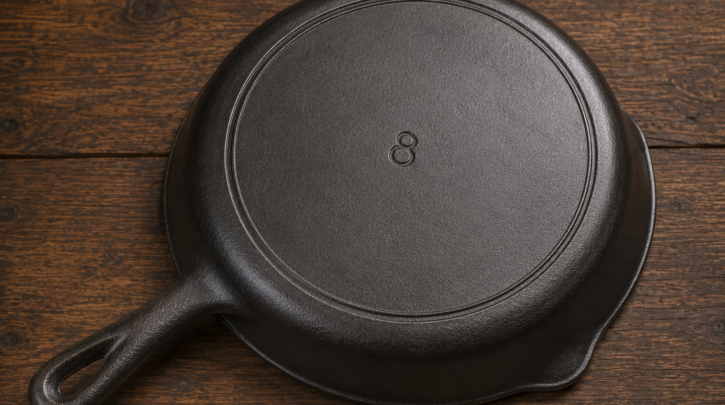
Nearly every piece of identifiable Griswold carries markings on the underside: a maker’s mark or logo, a size number, and often a separate pattern number from the foundry’s internal mold-tracking system; see our marks and logos guide for how the logo itself changed across Griswold’s production history.
Size and Pattern Numbers
Griswold skillets are commonly referenced by a size number, roughly 0 through 20, each corresponding to a specific approximate diameter, alongside a separate pattern number used for more precise dating; see our skillet numbers guide for the full reference and why mismatched numbers are a genuine red flag.
Weight, Casting Quality, and the Gate Mark
Genuine period Griswold pieces show a specific casting quality — smooth, consistent surfaces with crisp, well-defined lettering — along with a gate mark on the underside, a small raised or ground mark left where molten iron entered the mold during casting. Checking the gate mark’s location and shape against known genuine examples is one of the more reliable, if less obvious, authentication checks available.
The Reproduction Problem Is Serious
Because genuine Griswold pieces can command real money, counterfeiters have specifically targeted this name more than almost any other in the hobby — adding fake logos to unmarked antique pans, and producing entirely new castings from copied molds sold as genuine originals; see our fakes and reproductions guide before making any purchase where authenticity genuinely matters to the price.
Keep a Quick Reference Handy
Our free 5-Second Griswold Skillet ID Checklist distills the fastest, most reliable checks into one printable page you can keep with you at estate sales and flea markets.
Griswold’s Main Historic Rival
Wagner Manufacturing, based in Sidney, Ohio, was Griswold’s closest competitor throughout most of its history, and the two brands eventually ended up connected through later corporate ownership, which adds real complexity to dating some later pieces; see our Griswold vs. Wagner guide for how to think about the two brands together.
Building Real Identification Skill
As with every collectible category, handling verified genuine pieces alongside known fakes — at shows, through a collector club, or via a trusted dealer — teaches the tactile and visual differences far more effectively than any written description can on its own; see our general antique cast iron identification guide for techniques that apply across every maker on this site.
Where Griswold Turns Up Today
Estate sales, inherited kitchen collections, and antique malls remain the most common sources for vintage Griswold, and given how widely this cookware was actually used rather than just displayed, it’s one of the more commonly encountered names in general household circulation rather than a purely niche antiques find; see our buying guide for what to expect across different sourcing options.
A Reasonable Starting Point
For a new collector, starting with common mid-range sizes in well-documented logo eras builds confidence and a genuine feel for casting quality before tackling the harder authentication challenges posed by rare sizes, specialty forms, and the fakes that specifically target those higher-value categories.
Cooking Value Alongside Collector Value
It’s worth remembering that even a common, unremarkable Griswold skillet remains a genuinely excellent piece of cooking equipment — properly seasoned and cared for, it will outlast most modern cookware by generations, which is part of why so much vintage Griswold is still in active kitchen use rather than sitting purely as a shelf display piece; see our seasoning guide for getting a newly acquired piece cooking-ready.
Whether your goal is a display collection, a working kitchen arsenal, or both at once, the same identification fundamentals apply.
Getting those fundamentals right early saves both money and frustration down the road.