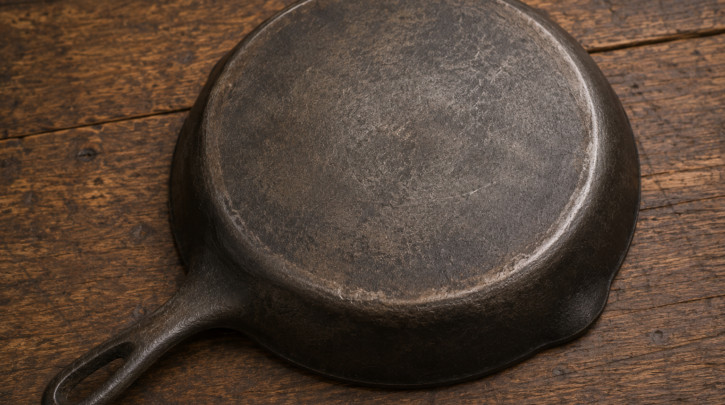

A genuinely large share of vintage cast iron in circulation today — sometimes called “orphan” pans by collectors — carries no maker’s mark at all, either because the original foundry never marked its wares or because decades of use wore a once-present mark away entirely.
Why So Much Cast Iron Is Unmarked
Many smaller regional foundries operated without ever marking their cookware, focused purely on functional, affordable production rather than brand recognition, and even among makers that did mark their wares, heavy decades of scrubbing and cooking use can wear a shallow mark down to illegibility or nothing at all.
Physical Characteristics Worth Checking
Without a mark to work from, identification shifts entirely to physical characteristics: gate mark location and shape, handle profile and hole shape, pour spout design, overall proportions, and heat ring style all carry information even with no name present; see our heat ring guide for how that particular feature factors into unmarked-piece dating specifically.
Handle Shape as a Clue
Different makers used distinctive handle profiles and mounting hole shapes — some favored a long oval hole, others a rounder shape, with genuine variation in curve and taper style between manufacturers. These details won’t confirm a specific maker on their own, but they can rule out possibilities or support a tentative attribution alongside other evidence.
Gate Mark Location
Different foundries tended toward characteristic gate mark placements and shapes, and comparing an unmarked piece’s gate mark against documented examples from known makers can sometimes support a reasonable, if not certain, attribution — the same detail that helps authenticate marked Griswold pieces works in reverse to suggest a likely maker for an unmarked one; see our Griswold fakes guide for how gate mark analysis works in that authentication context.
Comparing Against a Comprehensive Reference
Some advanced collectors specialize specifically in orphan pan identification, building detailed personal or shared references of casting characteristics tied to less-documented regional foundries — a genuinely deep, specialized corner of the hobby worth exploring once basic identification skills feel comfortable.
It’s Okay to Not Know for Certain
Many unmarked pieces will simply never be attributed to a specific maker with real confidence, and that’s a perfectly normal outcome rather than a failure of research — an unattributed piece can still be an excellent, functional piece of cookware worth owning and using regardless of whether its exact origin is ever confirmed; see our seasoning guide for getting any piece, marked or not, cooking-ready.
Value Implications of Unmarked Pieces
Unmarked pieces generally sell for less than confidently attributed pieces from recognized makers, since collector interest is substantially tied to maker recognition; see our general value guide for how attribution factors into overall value across every maker and non-maker piece alike.
A Genuinely Good Value for Cooks
For anyone buying cast iron purely to cook with rather than to collect, an unmarked orphan pan is often a genuinely smart purchase — typically priced well below an equivalent marked piece from a recognized maker while offering comparable cooking performance once properly cleaned and seasoned.
Building Confidence With Orphan Pans
Handling and comparing several unmarked pieces side by side, ideally alongside confirmed genuine examples from known makers, builds a genuine feel for the subtle physical differences that separate one foundry’s work from another’s — a skill that develops gradually rather than something learned from a single reading of any guide.
Orphan Pans as a Genuine Specialty
Some collectors find unmarked pieces more interesting precisely because of the detective work involved — there’s a real satisfaction in narrowing down a likely maker or region through careful physical comparison rather than simply reading a name off the bottom of the pan.
That patient, comparative approach is a genuinely rewarding skill in its own right.
Regional Foundries Worth Knowing About
Beyond the major names covered elsewhere on this site, numerous smaller regional foundries operated across the country producing perfectly serviceable cast iron cookware without ever building the kind of national brand recognition Griswold or Wagner achieved — learning to recognize a handful of these regional characteristics, where documented, adds real depth to orphan-pan identification beyond simply concluding “unknown maker” every time.