
Most vintage cast iron remains genuinely affordable, but a specific set of well-documented rarities across the major makers command serious money whenever a confirmed genuine example surfaces — understanding what makes these particular pieces rare helps calibrate expectations for everything else.
Griswold Spider Skillets
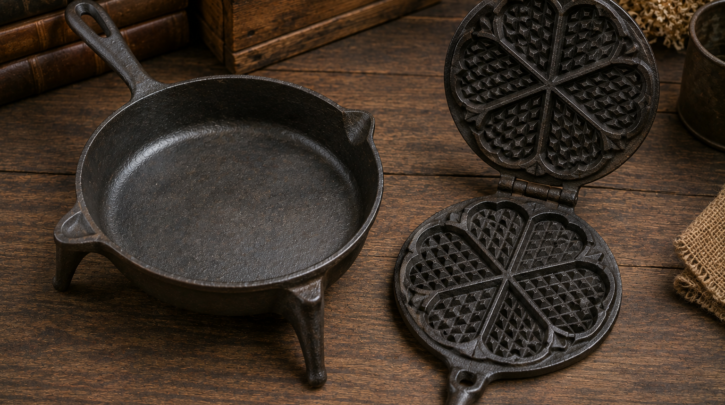
Spider skillets — three- or four-legged pans designed for open-fire cooking rather than a flat stovetop — are among the most recognized genuine rarities in the entire hobby, produced in far smaller numbers than standard flat-bottomed skillets; see our Griswold value guide for how this specialty form fits into Griswold’s broader value picture.
Very Small and Very Large Griswold Sizes
Griswold’s smallest sizes, roughly 0 through 2, and its largest sizes, roughly 13 and above, were produced in much smaller numbers than the common household range and command correspondingly stronger prices when confirmed genuine; see our Griswold skillet numbers guide for the full size reference this rarity pattern is built on.
Confirmed Sidney -0- Wagner Pieces
Wagner pieces bearing a confirmed, genuine Sidney -0- mark command a real premium over more generic later Wagner production, reflecting strong, specific collector demand for this particular documented era; see our Sidney -0- guide for what makes this specific mark so sought after.
Unusual Hollowware and Specialty Forms
Beyond skillets, unusual Dutch oven configurations, rare waffle iron patterns, and uncommon tea kettle designs across every maker on this site represent lower-production forms that draw genuine specialist collector interest beyond the more commonly available standard skillet lineup.
Genuinely Discontinued Lodge Patterns
Because Lodge remains in continuous production, its rarity profile looks different from Griswold or Wagner — genuinely discontinued patterns, forms, and early features specific to Lodge’s own long history are the equivalent rarity category within that brand; see our discontinued patterns guide for how to identify these specifically.
These Are Examples, Not Guarantees
The specific pieces and categories described here represent the kind of rarity that commands real money, not a promise that any particular piece matching a general description will fetch a specific price — confirming genuine authenticity and checking recent actual sales matters far more than assuming a piece is valuable simply because it resembles a known rarity.
Why Rarities Are Also Prime Fake Targets
Precisely because these categories command real premiums, they’re also the specific pieces most likely to attract fakes and alterations, especially for Griswold; see our Griswold fakes guide for the authentication checks worth running before paying rarity-level prices for anything.
Finding These Pieces
Genuine rarities surface through the same channels as any other vintage cast iron — estate sales, antique malls, specialist dealers, and online marketplaces — though they surface rarely enough that patience and consistent, ongoing searching matter more than expecting to find one on any single trip.
The Thrill of the Hunt
Part of what keeps experienced collectors coming back to estate sales and flea markets, even after years in the hobby, is the genuine possibility — however statistically unlikely on any given day — of stumbling across one of these documented rarities in a box of otherwise ordinary kitchen cookware.
Building Toward Confident Rarity Recognition
Recognizing a genuine rarity confidently, rather than hoping a common piece might be something special, comes from the same patient identification skill-building covered throughout this site — the more familiar you are with ordinary pieces, the more a genuine rarity will actually stand out; see our general identification guide for building that foundation.
A Realistic Expectation
Most collectors, even those active in the hobby for years, never personally stumble across one of these headline rarities in the wild — the vast majority acquire them, if at all, through deliberate purchases from specialist dealers or auctions specifically because a confirmed example is being offered, rather than by accident at a random estate sale.
That said, the possibility is real enough to keep the hunt genuinely exciting for anyone who enjoys the process.